

The rate and degree of abrasive wear depend on the conditions in which the machine operates, the material being extracted, the temperature and the working method. To minimise material loss due to abrasion, wear-resistant steel plates are used in the construction of buckets and shovels made of wear-resistant steel. These are generally materials with a hardness of 400, 450 or 500 HB, which have a service life and strength several times longer compared to standard structural materials. In some cases, even this protection is not sufficient, or machine downtime for repairs needs to be reduced. For these cases, we supply several types of products made from composite materials containing chromium carbides. These products are a creative, effective and inexpensive solution for wear protection of the most heavily stressed machine parts, where their service life compared to hardened plates is many times longer.
Composite materials in a block applied to a material with good weldability are highly wear-resistant and have a hardness of more than 700 HB. They are supplied in a wide range of shapes and sizes.
- all blocks feature a hardness of 700 HB
- they contain hard chromium carbide bonded in a matrix applied to a weldable base plate
- all parts are magnetic due to their iron content
- they are also suitable for work at temperatures above 700 °C
We supply two-component composite materials in the most popular dimensions immediately from our own stock. We are able to dispatch a further wide range within a short time thanks to cooperation with leading global manufacturers in the field.
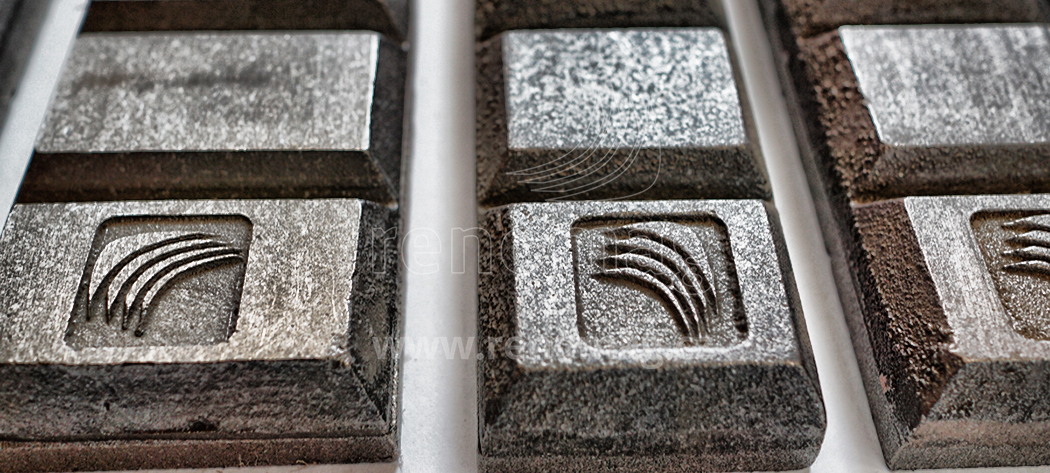
Perforated Blocks ("Chocolate Bars")
We offer unique mouldable perforated wear-resistant blocks ("chocolate bars") in many dimensions, and their use is highly versatile. They can be bent and placed on curved surfaces, and thanks to the perforation, they can also be easily divided with a grinder to adjust to the required size. They are mainly used for wear protection on excavator buckets, loader buckets, on the working parts of hammers, crusher jaws and inlet openings, or in many other industrial applications.
- resembles a chocolate bar in shape
- the layer of high-hardness, wear-resistant material is in the upper, pyramid-shaped part
- the block of "squares" can be welded onto the base as a whole, or gradually – like a chocolate bar – square by square, while the soft bottom layer can also be slightly bent, adding further possibilities for use
| RENOMAG Designation | Size (mm) | Dimensions (mm) | Weight (kg) | |||
|---|---|---|---|---|---|---|
| A | B | C | D | |||
| XRC25 | 240 × 25 × 23 | 240 | 25 | 15 | 23 | 0,9 |
| XRC40 | 240 × 40 × 23 | 240 | 40 | 15 | 23 | 1,5 |
| XRC50 | 240 × 50 × 23 | 240 | 50 | 15 | 23 | 1,9 |
| XRC65 | 240 × 65 × 23 | 240 | 65 | 15 | 23 | 2,5 |
| XRC80 | 240 × 80 × 23 | 240 | 80 | 15 | 23 | 3,2 |
| XRC90 | 240 × 90 × 23 | 240 | 90 | 15 | 23 | 3,5 |
| XRC100 | 240 × 100 × 23 | 240 | 100 | 15 | 23 | 3,9 |
| XRC130 | 240 × 130 × 23 | 240 | 130 | 15 | 23 | 5,4 |
| XRC150 | 240 × 150 × 23 | 240 | 150 | 15 | 23 | 6 |

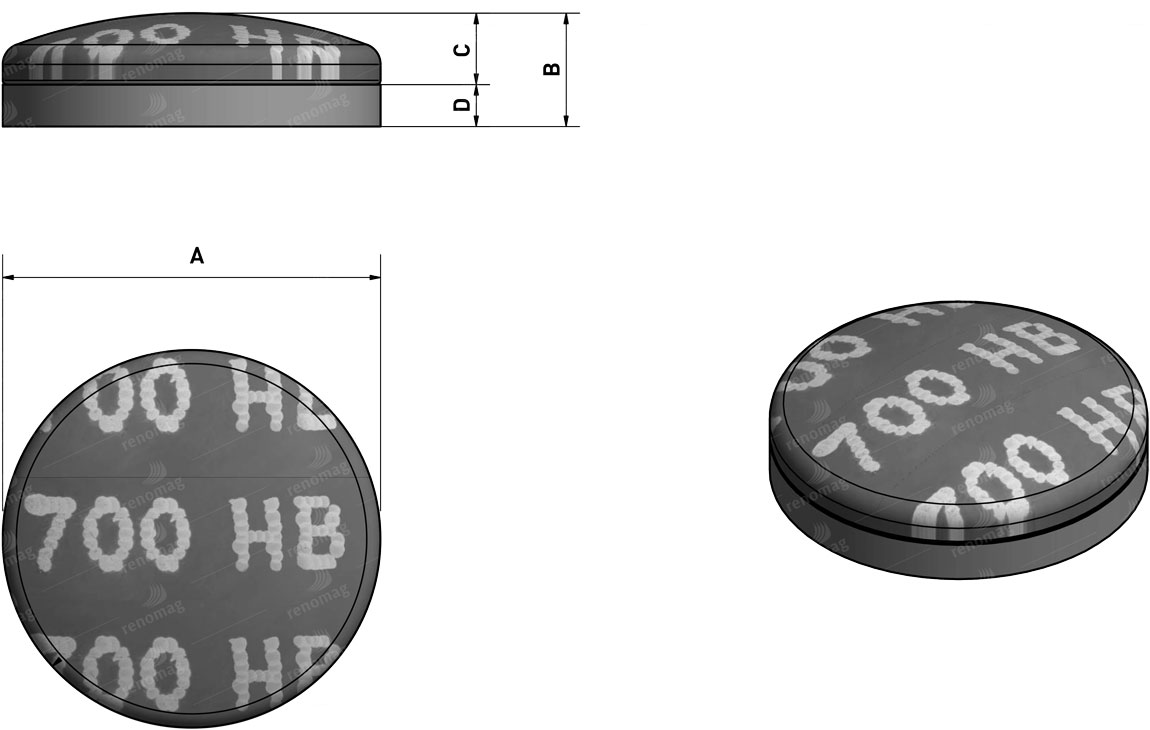
Round Blocks ("Buttons")
The round shape directs the flow of material, the convex surface deflects the direction of abrasive action and is resistant to impacts. Several sizes are available for easy selection based on the surface area to be effectively protected against wear. The most common application is on the sides of excavator buckets and loader buckets during extraction in quarries.
- a round, domed shape with a chamfer that provides maximum protection against abrasion and deflects the effects of impacts
- when welded on, this shape is ideal for minimising the risk of cracks forming in the base material
- it is intended mainly for excavator buckets
- the button-shaped element has a thick layer of high-hardness, wear-resistant material applied as a top crown on a round weldable base material
| RENOMAG Designation | Size (diameter × height) in mm | Dimensions (mm) | Weight (kg) | |||
|---|---|---|---|---|---|---|
| A | B | C | D | |||
| XRB60 | 60 × 27 | 60 | 27 | 17 | 10 | 0,7 |
| XRB75 | 75 × 27 | 75 | 27 | 17 | 10 | 0,8 |
| XRB90 | 90 × 27 | 90 | 27 | 17 | 10 | 1,4 |
| XRB110 | 110 × 32 | 110 | 32 | 20 | 12 | 2,1 |
| XRB115 | 115 × 32 | 115 | 32 | 20 | 12 | 2,5 |
| XRB150 | 150 × 41 | 150 | 41 | 25 | 16 | 5,7 |
Rectangular Blocks
Rectangular blocks with a thick layer of wear-resistant material are used where there is no heavy impact stress and installation on a flat surface is possible (they cannot be bent). They can be used, for example, on the side edges of loader buckets working with loose abrasive material, and other similar applications.
- a prism shape with a massive layer of wear-resistant material
- serves as additional protection in highly abrasive environments with relatively low impact stress, for flat surfaces (cannot be bent)
- it is a material with high hardness and wear resistance applied to the thin, weldable bottom side of the block
| RENOMAG Designation | Size (mm) | Dimensions (mm) | Weight (kg) | ||||
|---|---|---|---|---|---|---|---|
| A | B | C | D | E | |||
| XRS200A | 200 × 25 × 25 | 200 | 25 | 15 | 10 | 25 | 1,0 |
| XRS300A | 300 × 25 × 25 | 300 | 25 | 15 | 10 | 25 | 1,5 |
| XRS115 | 115 × 50 × 50 | 115 | 50 | 38 | 12 | 50 | 2,3 |
| XRS150A | 150 × 50 × 50 | 150 | 50 | 40 | 10 | 50 | 2,9 |
| XRS230 | 230 × 50 × 50 | 230 | 50 | 38 | 12 | 50 | 4,5 |
| XRS432 | 432 × 50 × 50 | 432 | 50 | 38 | 12 | 50 | 8,5 |
| XRS150B | 150 × 75 × 39 | 150 | 75 | 29 | 10 | 39 | 3,4 |
| XRS150C | 150 × 75 × 50 | 150 | 75 | 40 | 10 | 50 | 4,4 |
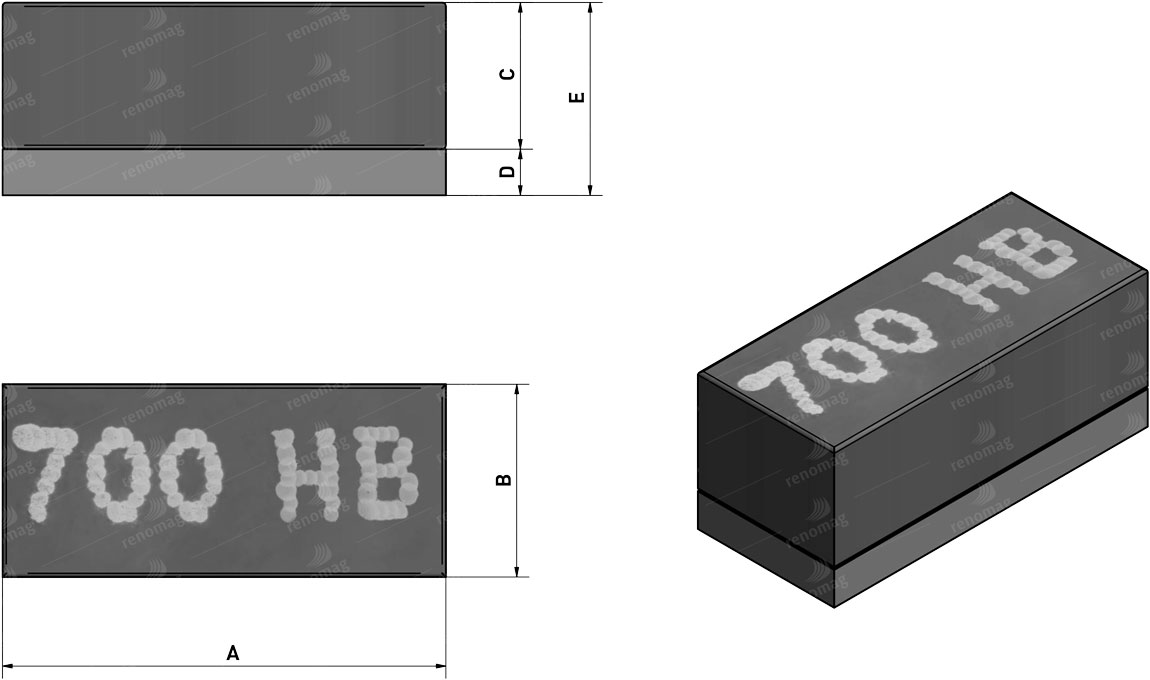
Plate Blocks ("Friction")
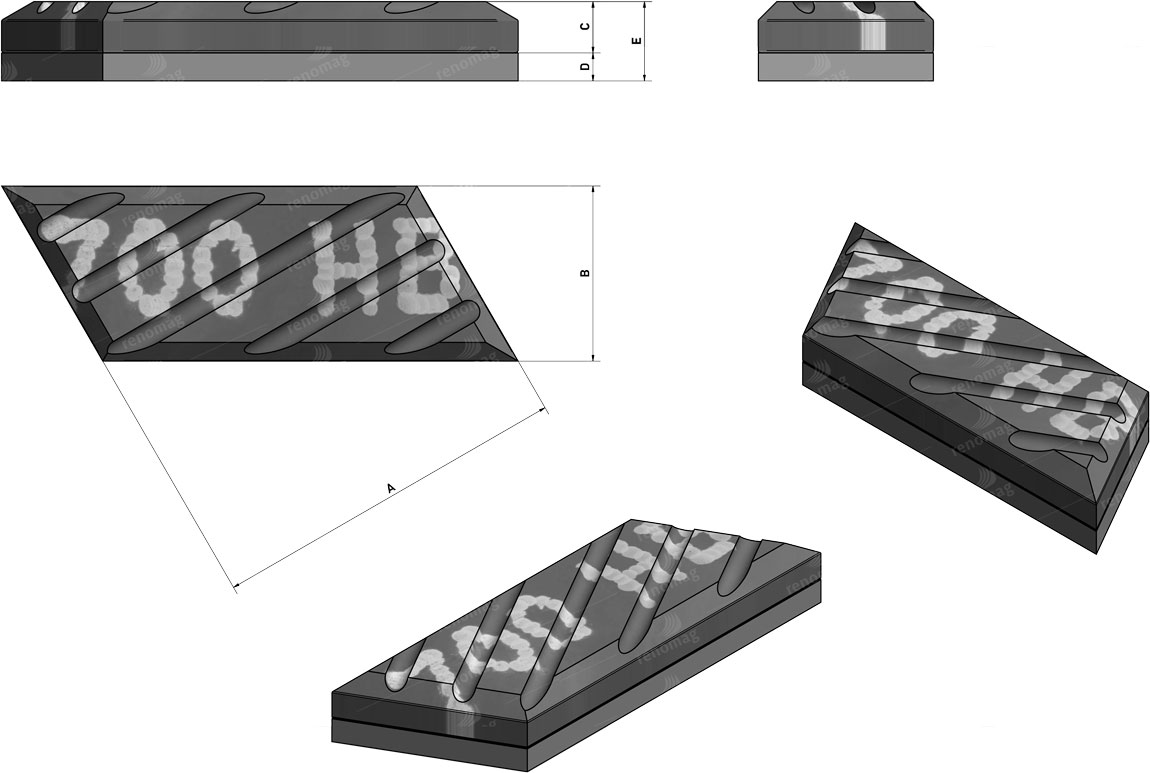
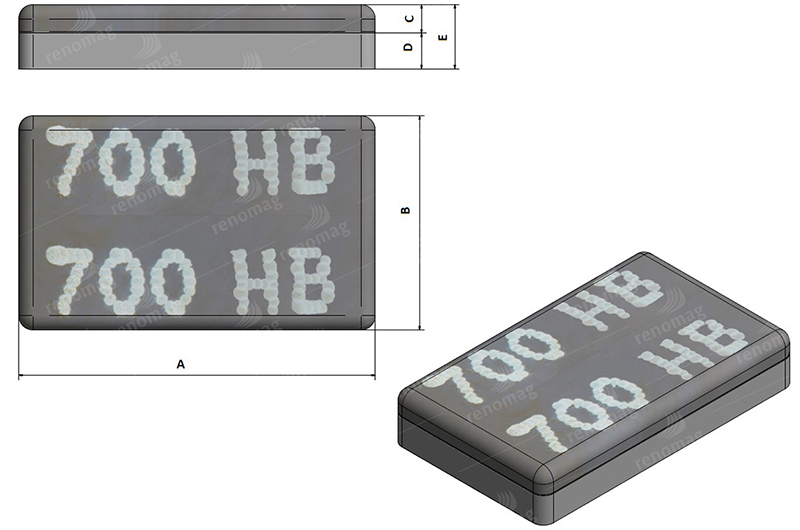
Plate blocks for abrasion protection excel especially where there is a need to protect large flat surfaces in places subject to intense friction and wear from abrasive material.
-
they are an excellent choice for large surfaces, such as the bottoms and sides of rock excavation buckets, truck and dumper bodies, and the sides of bulldozer blade holders
| RENOMAG Designation | Type | Size (mm) | Dimensions (mm) | Weight (kg) | ||||
|---|---|---|---|---|---|---|---|---|
| A | B | C | D | E | ||||
| XRD1-214 | 1 | 214 × 101 × 34 | 214 | 101 | 22 | 12 | 34 | 5,1 |
| XRD1-302 | 302 × 101 × 34 | 302 | 101 | 22 | 12 | 34 | 7,3 | |
| XRD1-154 | 154 × 101 × 34 | 154 | 101 | 22 | 12 | 34 | 3,7 | |
| XRD1-279 | 279 × 75 × 34 | 279 | 75 | 22 | 12 | 34 | 6,1 | |
| XRD2-214L | 2 | 214 × 101 × 34 | 214 | 101 | 22 | 12 | 34 | 5,9 |
| XRD2-214R | 214 × 101 × 34 | 214 | 101 | 22 | 12 | 34 | 5,9 | |
| XRD2-302L | 302 × 101 × 34 | 302 | 101 | 22 | 12 | 34 | 8,4 | |
| XRD2-302R | 302 × 101 × 34 | 302 | 101 | 22 | 12 | 34 | 8,4 | |
| XRD2-154L | 154 × 101 × 34 | 154 | 101 | 22 | 12 | 34 | 4,2 | |
| XRD2-154R | 154 × 101 × 34 | 154 | 101 | 22 | 12 | 34 | 4,2 | |
| XRD3-250A | 3 | 250 × 150 × 45 | 250 | 150 | 20 | 25 | 45 | 13,1 |
| XRD3-200 | 200 × 150 × 45 | 200 | 150 | 20 | 25 | 45 | 10,5 | |
| XRD3-250B | 250 × 250 × 45 | 250 | 250 | 20 | 25 | 45 | 21,9 | |
TYPE 1
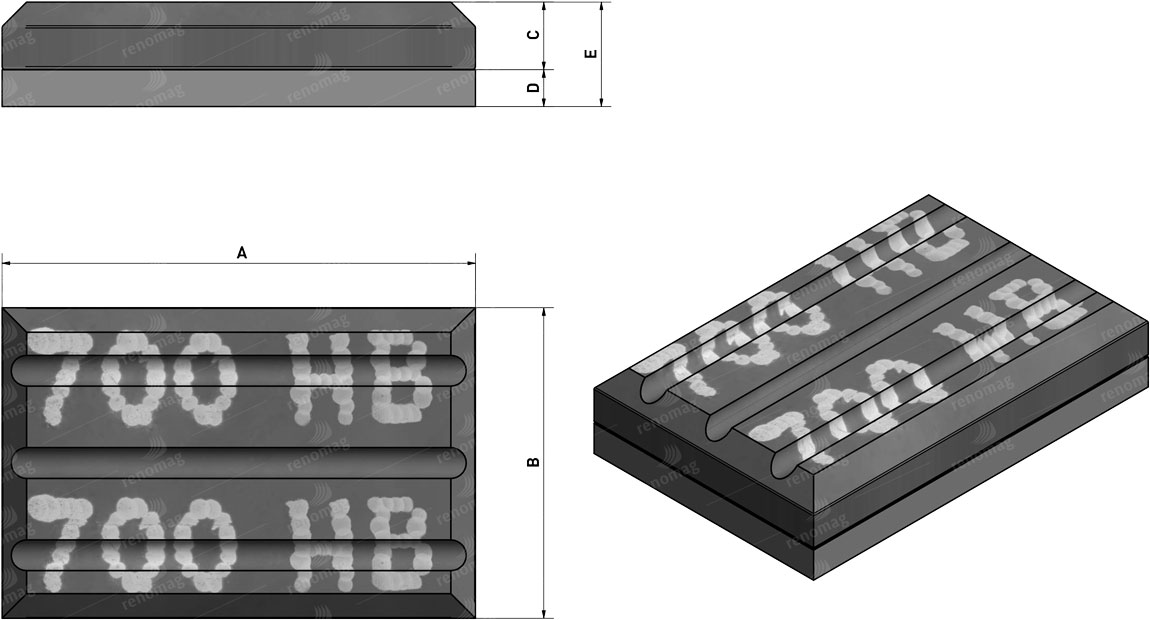
TYPE 2
TYPE 3
All types of wear-resistant blocks can also be supplied in dimensions based on your specific requirements.
Prospekt Bloky dvousložkové chromkarbidové 700 HB Renomag (897 KB)
View catalogue


